Why Choose Push-Back Storage for Your Warehouse?

Time:2026-10-07 Author:Henry
0%

Why Choose Push-Back Storage for Your Warehouse?

Warehouse space is expensive, especially when every pallet position affects operating costs. Push-Back Storage can increase storage density without requiring a larger building. It uses inclined rails and nested pallets. Each new pallet moves the previous one deeper into the lane. Retrieval then follows a controlled last-in, first-out flow.

David J. Piasecki, a recognized warehouse operations consultant, once stated, “The best storage system matches the product, the process, and the people.” This principle matters here. Push-Back Storage suits warehouses handling several pallets of the same product. It also supports faster loading and unloading than many floor-stacking methods. Operators can access pallets from one aisle. Fewer aisles may mean more usable capacity.

The details matter. Pallet quality, rack depth, forklift skill, and product turnover can change the result. A damaged pallet may not move smoothly. An inexperienced operator may also create unsafe pressure inside the lane. That risk deserves attention. It is not a perfect solution.

A careful warehouse assessment should compare travel distance, inventory rotation, access needs, and installation costs. Products requiring strict first-in, first-out control may need another system. Push-Back Storage works best when its operating limits are understood. This article examines its space-saving performance, workflow advantages, maintenance needs, and practical drawbacks. The goal is not to promote a rack blindly. It is to help decision-makers choose with evidence, realistic expectations, and warehouse-floor experience.
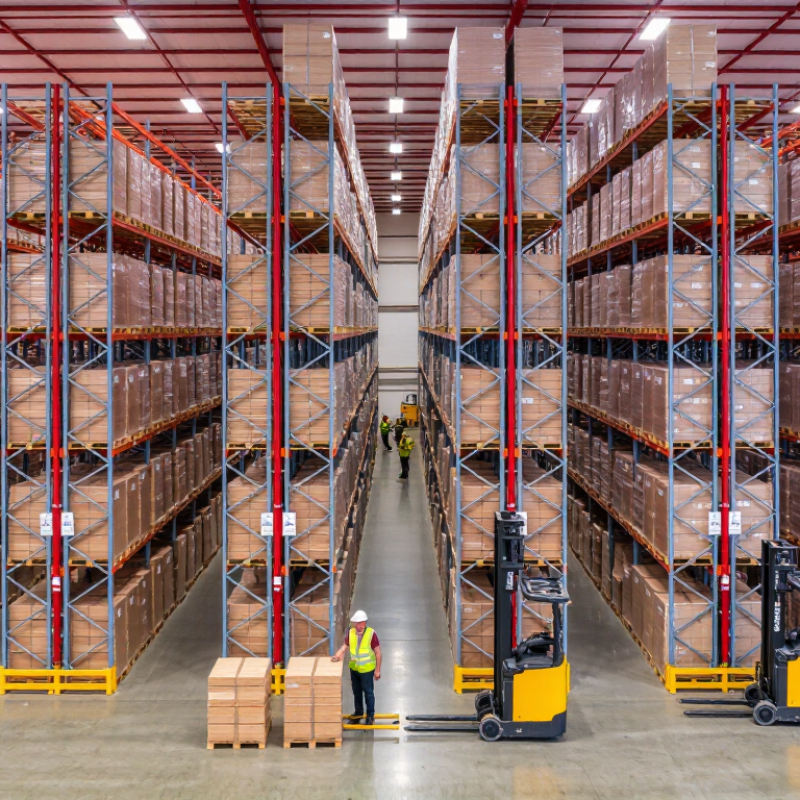
Why Choose Push-Back Storage for Your Warehouse?

What Is Push-Back Storage and How Does It Work?

Push-back storage uses inclined rails or carts to hold several pallets in one lane. A forklift loads the first pallet at the front. Each new pallet pushes the previous one deeper into the lane. During retrieval, the front pallet moves out first, and gravity brings the next pallet forward. This creates a last-in, first-out flow. It suits warehouses storing multiple pallets of the same SKU, especially products with stable demand and no strict first-in, first-out requirement. Deep lanes reduce travel distance and can release valuable floor space. The trade-off is easy to underestimate.

MHI’s 2024 Annual Industry Report found that 55% of surveyed supply-chain leaders planned to increase technology investment. Push-back racking is not fully automated, but it supports denser, more controlled movement. In practical warehouse projects, lanes commonly hold two to six pallets deep, depending on pallet weight, rack height, and equipment limits. More depth improves density, but it can reduce selectivity. I have seen operators choose excessive depth, then lose time searching for the correct SKU. Layout decisions need real order data, not attractive drawings.

Tips: Reserve push-back lanes for fast-moving, pallet-level inventory. Check pallet dimensions before installation. Train drivers to enter squarely and control speed near the rack. Inspect carts, rails, anchors, and backstops regularly. Keep heavier pallets in lower positions. If expiration dates matter, reconsider the LIFO model. WERC’s distribution-center benchmarking work repeatedly shows that labor and space decisions affect operating cost together, not separately. That relationship deserves a closer review before approval.

Why Choose Push-Back Storage for Your Warehouse?

Push-back storage is a high-density pallet system in which pallets are loaded and retrieved from the same aisle. Cart-based lanes commonly store 2–6 pallets deep, providing more density than selective racking while retaining better access than drive-in systems.

The chart compares representative pallet-storage depths used in common warehouse rack configurations. Push-back storage typically offers 2–6 pallet positions per lane and operates on a last-in, first-out basis, making it suitable for products managed by batch, lot, or expiration-date groups.

How Push-Back Racking Improves Warehouse Space Utilization

Why Choose Push-Back Storage for Your Warehouse?

Push-back racking can improve warehouse space utilization by storing pallets several levels deep. It uses inclined rails and gravity, so forklifts load and retrieve pallets from one aisle. This reduces aisle requirements compared with selective racking. More storage fits inside the same building footprint.

The 2024 MHI Annual Industry Report projects inventory and network optimization technology adoption to reach 82% within five years. That trend reflects a practical concern: warehouses need more capacity without continually expanding. Push-back systems support this goal, especially for medium-turnover products with several pallets per SKU. Operators can gain better cubic utilization while keeping forklift travel shorter. The result is not always perfect. Deep lanes can hide aging stock if inventory discipline is weak.

Tips: Match each lane to one SKU or batch whenever possible. Use clear pallet labels and routine cycle counts. Check pallet condition, rail alignment, and load limits regularly. A simple lane map can prevent unnecessary searching.

Push-back storage also suits buildings with limited ceiling height or expensive floor space. However, it should not replace every rack type. Fast-moving products may need direct access, while irregular pallets can create handling problems. A professional layout review should compare pallet dimensions, product turnover, forklift clearance, and fire-safety requirements. The 2024 MHI report supports technology planning, but real gains still depend on accurate data and disciplined daily operation.

Key Benefits of Push-Back Storage for Inventory Management

Why Choose Push-Back Storage for Your Warehouse?

Key Benefits of Push-Back Storage for Inventory Management

Push-back storage improves inventory management by using each lane’s depth. Pallets move along nested rails or carts, reducing unused aisle space. This design can hold several pallets behind one another. It works especially well for warehouses handling multiple pallets of similar products. Operators load and retrieve goods from the same aisle. Fewer travel movements can also reduce handling time.

Inventory control becomes clearer when each lane has a defined product family. A visible lane label helps workers confirm the SKU before loading. Positioning pallets by batch, size, or dispatch priority can reduce picking errors. The system also supports high-density storage without blocking every pallet behind it. However, product rotation needs careful planning. Push-back storage usually follows a last-in, first-out pattern.

That limitation matters for date-sensitive inventory. A warehouse may need separate FIFO solutions for certain products. Regular cycle counts remain necessary, even when locations look orderly. Dust, damaged pallets, and incorrect loading can still create problems. In practical reviews, I would inspect rail condition, pallet quality, and load consistency. One uneven pallet can affect movement and safety. The system is efficient, but not effortless. Good results depend on clear procedures, trained operators, and honest checks of daily workflow.

What Products and Warehouses Suit Push-Back Storage?

Push-back storage suits warehouses handling many pallets of the same product. It works well for canned goods, packaged beverages, building materials, and seasonal inventory. Each lane stores pallets behind one another on nested carts. Operators load and retrieve from one aisle. This can reduce travel distance and use vertical space more effectively than selective racking. It is especially practical when warehouses need high density but do not require direct access to every pallet.

Product flow matters more than product type. Push-back storage fits last-in, first-out operations, where newer stock does not need to ship first. It may suit reserve inventory, batch-controlled goods, and products with moderate turnover. It is less suitable for strict first-in, first-out items, mixed cartons, or highly fragmented stock. According to the 2024 MHI Annual Industry Report, 37% of surveyed organizations currently use inventory and network optimization, while 55% expect adoption within one or two years. That trend makes location data essential. A dense rack without accurate records becomes expensive confusion. I have seen small SKU differences create avoidable picking delays.

Tips: Group similar pallets by SKU, batch, and expiry profile. Check pallet quality before loading. Leave clear inspection space. Test lane depth with real pallet weights, not assumptions. Review movement data every quarter. Push-back is efficient, but not universally efficient.

Why Choose Push-Back Storage for Your Warehouse? - What Products and Warehouses Suit Push-Back Storage?

Typical planning guidance for push-back pallet racking. Actual capacity and suitability depend on pallet dimensions, load weight, equipment, seismic conditions, and local safety requirements.
Evaluation Dimension Typical Push-Back Storage Condition Products That Usually Suit It Warehouse Suitability Planning Consideration
Storage Principle Pallets are loaded and retrieved from the same aisle, with each new pallet pushing the previous pallet farther into the lane. Palletized goods that can be handled as complete loads. Warehouses seeking higher density without installing deep lanes accessed from both sides. The system generally operates on a last-in, first-out basis within each lane.
Pallet-Lane Depth Common configurations provide approximately 2 to 6 pallet positions in depth per lane. Products stored in repeated batches, lots, or production runs. Facilities where deeper storage is more valuable than direct access to every pallet. The final depth should be selected according to SKU velocity, pallet stability, and required selectivity.
Inventory Rotation Best suited to LIFO inventory rotation and products without strict first-in, first-out requirements. Seasonal merchandise, reserve stock, promotional goods, and non-perishable materials. Distribution or manufacturing warehouses that replenish and ship in batches. Products with expiry dates may require additional stock-rotation controls or another racking method.
SKU Variety Most effective when each lane is assigned to one SKU, product family, lot, or clearly controlled batch. Low-to-medium SKU variety with multiple pallets per SKU. Warehouses where reserve inventory is concentrated rather than highly fragmented. Very high SKU variety with one pallet per SKU can reduce space efficiency.
Product Weight Suitable for pallet loads within the rated capacity of the rack, carts, beams, and handling equipment. Packaged food, beverages, building materials, paper products, household goods, and industrial components. Facilities handling consistent and predictable pallet weights. Rack capacity must be verified using the actual unit load, pallet type, lane depth, and beam configuration.
Product Packaging Works best with rigid, stable, and uniformly sized pallets that can tolerate controlled contact during loading. Cartons, shrink-wrapped cases, drums, sacks on stable pallets, and boxed components. Warehouses with standardized pallet footprints and consistent load overhang limits. Fragile or unstable loads may need slip sheets, load containment, or a different storage solution.
Space Utilization Reduces the number of dedicated access aisles compared with selective pallet racking, potentially increasing pallet positions within the same footprint. Dense reserve inventory and products stored in multiple pallet quantities. Buildings where floor area is limited or expansion space is expensive. The final gain depends on aisle width, rack height, fire protection, pallet dimensions, and required access.
Throughput Profile Supports batch loading and retrieval, but is less suitable when every pallet must be accessed immediately. Inbound or outbound batches, campaign production, and reserve stock replenishment. Medium-throughput operations with predictable movement patterns. High-frequency picking of individual pallets may be better served by selective or automated systems.
Temperature-Controlled Storage Can be used in ambient, chilled, or frozen environments when the rack materials and equipment are specified for those conditions. Frozen foods, chilled products, and temperature-sensitive packaged goods with compatible rotation policies. Cold stores where maximizing cubic capacity can reduce the space requiring temperature control. Temperature, condensation, corrosion protection, fire safety, and FIFO requirements must be reviewed together.
Handling Equipment Typically operated with a suitable forklift, with clearances and load reach matched to the rack design. Standard pallet loads that can be positioned accurately and safely. Warehouses with trained operators and consistent equipment availability. Forklift dimensions, turning radius, lift height, mast type, and operator training affect the practical capacity.
Best-Fit Warehouse Type High-density storage with controlled SKU allocation and limited need for direct access to every pallet. Cold storage, food and beverage distribution, manufacturing buffers, seasonal storage, and wholesale reserve areas. Warehouses prioritizing density, batch handling, and efficient use of vertical space. A storage analysis should compare push-back with selective, drive-in, pallet flow, and automated alternatives.

How to Evaluate Push-Back Storage for Your Warehouse Needs

Evaluate push-back storage by matching pallet flow to real operating conditions, not catalog claims. In a warehouse review, record pallet dimensions, load weights, SKU counts, and daily receipts. Observe how often each lane turns over. Slow-moving products may suit deeper lanes, while frequent access demands fewer pallet positions per lane. This distinction affects labor, travel distance, and replenishment time.

Inspect the rack’s usable depth and channel angle with your actual pallets. A slight mismatch can create hesitation during loading or retrieval. Ask for tested load ratings, installation tolerances, and maintenance requirements. Check whether forklifts can approach the rack safely without awkward turning. Measure aisle width on the floor, not only on a drawing. We once found that a planned aisle looked adequate until protective barriers reduced turning space. That detail changed the layout. Small errors matter.

Tips: Compare storage density with selectivity, not density alone. Request a simple throughput trial using representative pallets. Review wheel, rail, and brake access before approval. Leave room for damaged pallets and seasonal peaks. If operators need repeated manual adjustments, the system may be too deep or poorly configured. Recheck assumptions after two weeks of live use; early data can expose problems that planning spreadsheets miss.

FAQS

What is push-back storage?

Push-back storage uses inclined rails or carts to hold several pallets in one lane. A forklift places a new pallet at the front. Each pallet moves deeper as another pallet enters.

How does pallet retrieval work?

The front pallet leaves first. Gravity then moves the next pallet forward. This creates a last-in, first-out flow.

Which products suit push-back storage?

It suits pallet-level inventory with stable demand. Multiple pallets of one SKU work especially well. Products with strict expiration control may need another system.

How deep should each lane be?

Many lanes hold two to six pallets. The best depth depends on pallet weight, rack height, and forklift limits. Deeper lanes save space but reduce selectivity.

What information should guide the layout?

Record pallet sizes, load weights, SKU counts, daily receipts, and lane turnover. Measure aisle width on the warehouse floor. Drawings can hide barriers and tight turning areas.

What safety practices matter during operation?

Drivers should enter squarely and control speed near the rack. Inspect rails, carts, anchors, and backstops regularly. Keep heavier pallets in lower positions.

How can a warehouse test the system before approval?

Run a throughput trial with representative pallets. Check wheel, rail, brake, and load-rating details. Watch operators load and retrieve actual pallets.

What problems can excessive lane depth create?

Operators may spend extra time searching for the correct SKU. Manual adjustments can increase labor and damage risk. I once underestimated this issue; real use exposed it.

When should the design be reviewed again?

Recheck the layout after two weeks of live operation. Early data may reveal slow retrieval, awkward turns, or replenishment delays. Plans are useful, but not perfect.

Conclusion

Push-Back Storage is a dynamic pallet racking solution designed to improve warehouse organization and make better use of available space. Pallets are placed on wheeled or guided lanes and pushed backward as new pallets are loaded from the front. When inventory is needed, the front pallet can be removed, allowing the pallets behind it to move forward for convenient access. This system supports a high-density storage layout while reducing unnecessary aisles and maximizing vertical and floor space.

Push-Back Storage is especially suitable for warehouses handling multiple pallets of the same product, medium-turnover inventory, and goods that benefit from last-in, first-out access. Its main advantages include improved space utilization, faster loading and unloading, organized inventory flow, and reduced forklift travel. Before choosing this solution, warehouse operators should evaluate product characteristics, pallet sizes, turnover rates, available ceiling height, access requirements, safety considerations, and future storage growth. A careful assessment helps determine whether push-back racking can meet operational needs efficiently and economically.

Henry

Henry

Henry is a dedicated marketing professional with a profound expertise in the company's offerings. With years of experience in the industry, he possesses an impressive understanding of the market dynamics and consumer behaviors that drive success. Henry is committed to sharing his insights through......