Narrow Aisle Storage is becoming a practical response to higher inventory pressure and limited warehouse space. It reduces aisle width, increases pallet density, and makes vertical capacity more valuable. A forklift turns through a tighter corridor, while selective racks rise several meters above the floor. The result can be more storage positions without expanding the building footprint.
MHI’s 2024 Annual Industry Report reported that 83% of supply-chain professionals expect robotics and automation adoption within five years. Narrow Aisle Storage supports this direction by creating structured travel paths for reach trucks, turret trucks, and automated vehicles. WERC’s 2024 DC Measures report also treats space utilization, picking accuracy, and operating speed as essential distribution-center measures. These indicators matter because dense storage alone does not guarantee better performance.
Dr. James A. Tompkins, a respected warehouse-design authority, described the warehouse as “the heart of the supply chain.” His point remains relevant here. A narrow aisle layout should serve product flow, not merely create more rack locations. That distinction is easy to miss.
The design is not perfect. Narrow aisles may require specialized trucks, stronger operator training, and stricter traffic control. Poor slotting can also turn a space-saving layout into a daily bottleneck. However, when product dimensions, turnover rates, rack heights, and equipment are studied together, Narrow Aisle Storage can improve capacity while preserving measurable warehouse discipline.
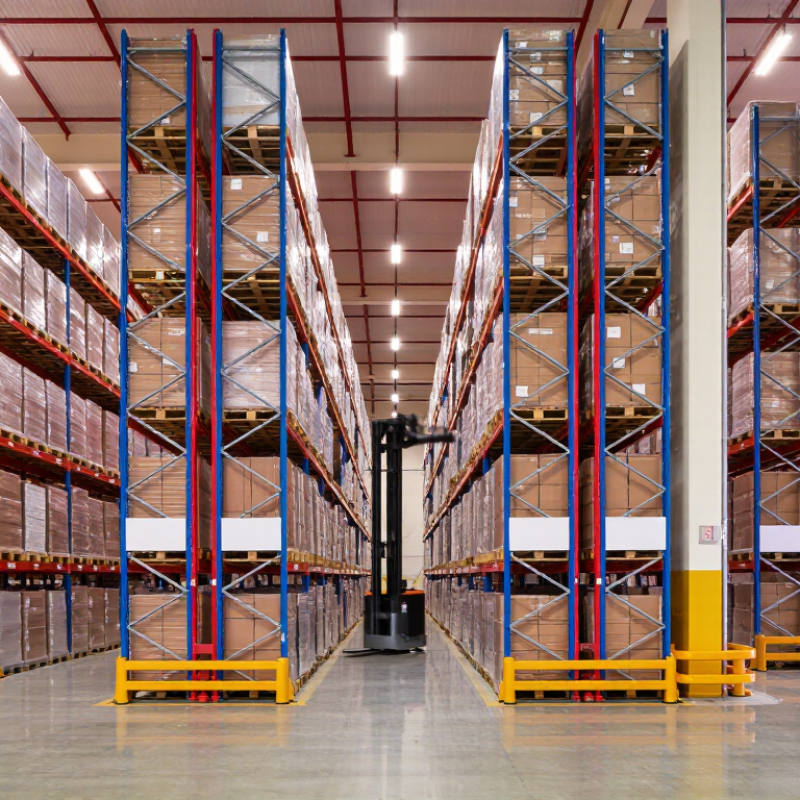
Narrow aisle storage is a warehouse layout that reduces travel space between pallet racks. Conventional aisles often measure about 3 to 3.7 meters. Narrow aisles may use 2.4 to 3 meters, while very narrow aisle systems can approach 1.5 to 2 meters. The exact width depends on lifting equipment, pallet size, and rack height. More rack positions fit within the same building footprint. Space matters.
The 2024 MHI Annual Industry Report identified labor availability as a major challenge for 55% of surveyed supply-chain professionals. Narrow aisles can shorten walking and driving distances, but they do not automatically improve productivity. In practice, poor slotting or slow equipment can create bottlenecks. I have seen layouts that looked efficient on paper, yet delayed replenishment during busy shifts.
Tips: Measure turning radii before changing aisle widths. Test one representative aisle first. Check pallet overhang, floor flatness, visibility, and emergency access. The equipment manufacturer’s specification is useful, but it should not replace an on-site assessment. Rack height also matters. Taller structures may increase capacity, while raising inspection and handling demands. The 2024 Global Warehousing Benchmark Report from the Warehouse Education and Research Council highlights inventory accuracy and order-cycle performance as key operational measures. Track both before and after implementation. A fuller warehouse is not always a faster warehouse.
Narrow aisle storage turns unused floor area into productive vertical space. Conventional pallet aisles often need 10 to 12 feet, while narrow aisle layouts can operate within roughly 6 to 8 feet, depending on equipment and load dimensions. That reduction may create 20% to 40% more pallet positions in the same building, according to warehouse design benchmarks published by the Warehousing Education and Research Council. More locations. Less construction pressure.
The height matters too. Selective racking, guided trucks, and suitable safety clearances can push storage upward without expanding the footprint. MHI’s 2024 Annual Industry Report found that 55% of supply-chain professionals planned to adopt robotics and automation within one to two years. Narrow aisles can support that direction, but only when floor conditions, rack protection, and traffic rules are carefully engineered. A tighter aisle is not automatically better. It may slow picking if operators lack training or if fast-moving products sit too far from dispatch. I have seen layouts look efficient on paper, then create awkward turning points beside loading doors. WERC benchmarking also emphasizes measuring travel time, order accuracy, and space utilization together, rather than celebrating density alone. The overlooked detail is maintenance access. A blocked aisle can erase the capacity gain quickly. Careful measurement beats impressive diagrams.
How Narrow Aisle Systems Maximize Warehouse Space
This planning scenario estimates pallet positions in a 10,000-square-foot storage zone using standard 48 × 40 inch pallets. Reducing aisle width from 12 feet to 6 feet increases potential pallet capacity, while the final layout must also consider lift-truck dimensions, rack height, fire protection, and operating requirements.
In a narrow aisle warehouse, every inch affects storage density, travel time, and safety. Equipment must match the rack layout, pallet dimensions, floor quality, and lifting height. A reach truck suits many selective-rack applications because its mast extends toward the load without requiring a wide turning circle. For very narrow aisles, a turret truck can rotate its forks and place pallets on either side. It works best on guided routes and accurately installed floors.
Small differences matter.
Articulated forklifts are useful where aisles are narrow but not extremely tight. Their jointed chassis helps operators enter racks while keeping the front end aligned. Low-level order pickers support frequent picking at lower elevations, while stackers handle lighter loads and shorter lifts.
Pallet conveyors, lift tables, and transfer cars can reduce unnecessary forklift travel. In taller facilities, wire guidance or rail guidance helps maintain consistent positioning. Still, automation is not automatically better. Poor pallet quality can interrupt the smoothest system.
Reliable operation also depends on safety equipment and daily controls. Speed limiters, aisle-end sensors, warning lights, load backrests, and pedestrian barriers improve visibility around rack corners. Battery charging areas need ventilation, clear access, and documented inspection routines.
Operators should practice pallet placement, emergency stops, and uneven-floor response. I have seen efficiency targets expose weak training. That lesson is easy to overlook.
A narrow aisle plan should be tested with real pallets, real turning movements, and realistic shift volumes before equipment is purchased.
Narrow aisle storage helps warehouses use vertical space without expanding the building footprint. In a well-planned layout, aisles may shrink to roughly 1.8 to 2.4 meters. That change can add several pallet positions across a busy floor. Operators also spend less time walking between locations. Vertical capacity matters.
However, narrower aisles require compatible handling equipment and disciplined traffic control. Forklifts need precise steering, stable loads, and enough clearance for safe turning. A small alignment error can damage racking, pallets, or products. Training is not optional. In my experience, the initial layout often looks efficient on paper but feels restrictive during peak hours. Temporary congestion near receiving areas can erase expected time savings.
Benefits include better cubic utilization, clearer inventory addresses, and shorter travel paths. Higher racks can also reduce pressure to lease extra space. Yet the investment is not limited to rack installation. Specialized trucks, accurate floors, lighting, rack protection, and inspections add costs. Costs rise. Maintenance can disrupt operations if one narrow aisle becomes unavailable. Emergency access and local safety requirements must guide the design. Some facilities should keep wider aisles for mixed loads, frequent pedestrian movement, or irregular products. A careful site survey, traffic study, and trial zone reveal more than a spreadsheet. Decisions should use measured throughput, not optimistic capacity estimates.
Choosing the right narrow aisle solution starts with the warehouse, not the equipment catalog.
Measure pallet sizes, load weights, rack heights, and daily movement before selecting a system. Aisle width must match the turning radius of the chosen truck. Do not trust a standard layout. A forklift turning beside a damaged rack can reveal costly design errors. Small measurements matter. Test the proposed route with actual pallets, not empty models.
Rack height should reflect ceiling clearance, sprinkler locations, and safe load limits. Check floor flatness across the entire operating area. A taller rack may increase storage density, but it can also demand better lifting control and lighting.
Operators need clear visibility around rack ends and intersections. I have seen efficient layouts slow down because drivers could not see approaching traffic. Real performance depends on people.
Review order volume, travel distance, charging needs, and maintenance access. A solution that saves floor space may create battery delays during busy shifts. Warehouse software should provide accurate locations and stock movements.
Leave room for future rack changes, seasonal inventory, and emergency access. Run a practical trial during normal working hours. Compare travel time, picking accuracy, noise, and operator fatigue.
If results look perfect on paper, question them. Daily operations are rarely perfect.
Reach trucks suit many selective-rack layouts. Their masts extend toward pallets without needing wide turning circles. Turret trucks suit very narrow aisles. They rotate forks and serve both rack sides. Articulated forklifts help in moderately narrow aisles. Small differences matter.
Choose one for very narrow aisles and high storage positions. It works best with guided routes and accurately installed floors. The forks can rotate toward either side. Uneven floors may reduce positioning accuracy.
Low-level order pickers support repeated picking near the floor. Stackers handle lighter loads and shorter lifts. Lift tables can reduce awkward manual handling. The correct choice depends on load weight and lift height.
Pallet conveyors move loads between fixed locations. Lift tables adjust working height. Transfer cars shift pallets across planned routes. These systems can reduce unnecessary forklift movement. Automation is not automatically better.
Useful controls include speed limiters, aisle-end sensors, and warning lights. Load backrests help stabilize elevated pallets. Pedestrian barriers separate people from moving equipment. Visibility near rack corners remains important.
Operators should practice accurate pallet placement and emergency stops. They also need practice responding to uneven floors. Training should reflect real turning movements and peak-hour congestion. Efficiency targets can expose weak training. That lesson is easy to overlook.
Narrow aisles improve vertical space usage and inventory organization. They can shorten travel paths and add pallet positions. Aisles may shrink to roughly 1.8 to 2.4 meters. Higher racks may reduce pressure for extra building space.
Narrow aisles require compatible trucks, stable loads, accurate steering, and disciplined traffic control. Specialized equipment, lighting, floor accuracy, rack protection, and inspections increase investment. One blocked aisle can disrupt operations. Costs rise.
Conduct a site survey and traffic study before purchasing equipment. Build a trial zone using real pallets and realistic shift volumes. Test receiving congestion and emergency access. A spreadsheet can mislead. Measured throughput matters more.
Narrow Aisle Storage is a warehouse layout and handling approach that uses reduced aisle widths to make better use of available floor space. By positioning pallet racks closer together and selecting equipment designed for precise maneuvering, warehouses can increase storage capacity without expanding their building footprint. This system is especially useful where land, construction space, or operating costs are limited.
Narrow Aisle Storage may rely on specialized forklifts, reach trucks, order pickers, or guided handling equipment, depending on the height and type of inventory. Its main advantages include improved space utilization, greater storage density, and more organized inventory access. However, narrow aisles can require higher operator skill, careful traffic planning, compatible racking, and additional investment in equipment and training. The right solution should be chosen by evaluating warehouse dimensions, rack height, load characteristics, order frequency, safety requirements, and future growth plans.
Kelida Racking