China’s carton and e-commerce sectors are expanding, making efficient Carton Flow Storage increasingly important. Carton flow racks can reduce walking, improve stock rotation, and create clearer picking lanes. Yet performance depends on design details, not appearance alone.
Grand View Research valued the global warehouse automation market at approximately USD 23 billion in 2023. Its report also projects strong growth through 2030. MHI’s 2024 Annual Industry Report found that supply-chain leaders continue increasing technology investment. These figures suggest a practical direction. Chinese manufacturers must combine mechanical reliability with measurable warehouse productivity.
Warehouse consultant David J. Piasecki offers a useful principle: “Fast movers deserve prime pick faces.” The sentence is simple. It explains why roller pitch, lane depth, replenishment access, and SKU velocity matter. A beautifully finished rack can still fail when cartons stop halfway down the lane.
This article reviews China’s top ten Carton Flow Storage manufacturers through clearer criteria. The assessment considers manufacturing experience, load testing, component quality, customization, safety documentation, delivery capability, and after-sales support. It also examines whether suppliers understand real warehouse conditions, including dusty floors, mixed carton sizes, and uneven replenishment schedules.
The ranking should not be treated as permanent. Supplier websites often present ideal specifications, while actual results depend on installation and operating discipline. Buyers should request references, test representative cartons, and verify certification details. That extra step may feel slow. It can prevent expensive redesigns later.
The selected companies are therefore discussed with both market visibility and practical evidence in mind. This approach may not remove every uncertainty, but it creates a more dependable comparison for distributors, manufacturers, and warehouse planners.
What Is Carton Flow Storage and How Does It Work?
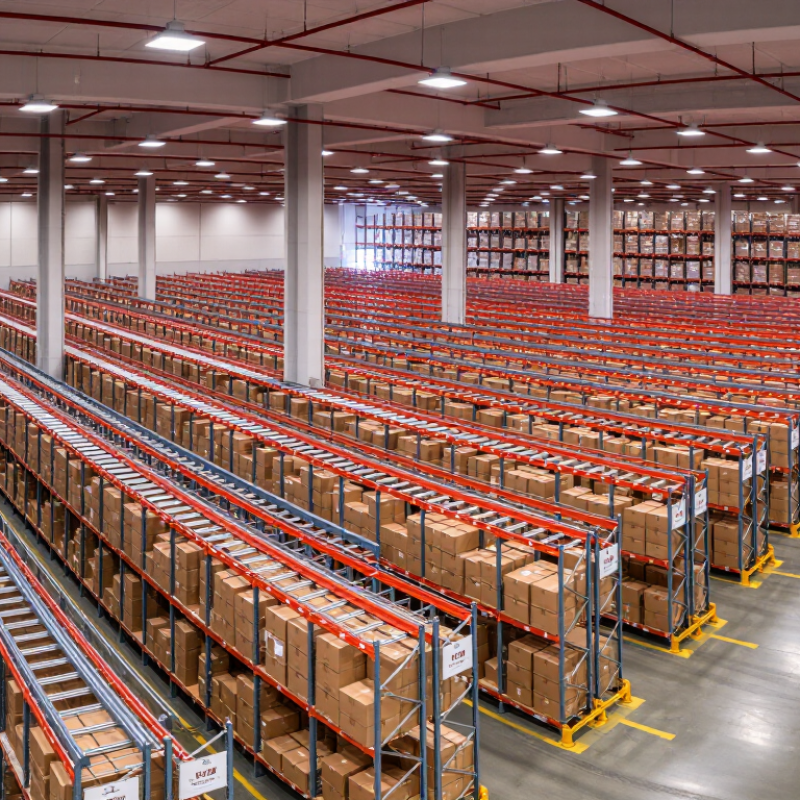
Carton flow storage is a gravity-assisted shelving system designed for cartons, totes, and small containers. Each lane contains slightly inclined rollers or wheels. Workers load products from the higher rear side. Gravity moves every carton toward the picking face. The next carton then advances automatically.
This design supports first-in, first-out stock rotation when products enter and leave the correct sides. It can reduce walking distance and keep picking areas organized. Dividers separate different stock-keeping units, while lane brakes control carton speed. A front stop keeps containers safely positioned. Small details matter here.
Reliable manufacturers usually begin with product dimensions, carton weight, turnover rate, and aisle space. They may test roller spacing with real cartons, not only digital measurements. Warehouse trials often reveal unexpected friction, unstable packaging, or poor label visibility. Carton flow is not a magic fix. Heavy boxes may need stronger rollers, and damaged cartons can stop a lane. Maintenance teams should inspect wheels, frames, stops, and labels regularly. The best layout is practical, adjustable, and easy for workers to understand. Yet even a carefully designed system may need changes after daily operation begins.
How to Evaluate Carton Flow Storage Manufacturers
China Top 10 Carton Flow Storage Manufacturers?
How to Evaluate Carton Flow Storage Manufacturers
A reliable evaluation begins with warehouse conditions, not catalog photos. Measure carton weight, case dimensions, SKU turnover, aisle width, and replenishment frequency. In field audits, small differences in carton edges often cause roller jams. Ask manufacturers for load tests using your actual cartons. Check frame deflection, roller spacing, lane pitch, braking performance, and operator safety features. A polished sample proves little.
The MHI 2024 Annual Industry Report states that 55% of supply chain leaders planned to increase technology investment. This signals stronger demand, but investment alone does not ensure a suitable flow system. Compare engineering drawings, rated capacities, testing methods, spare-part availability, and installation support. Request references from facilities with similar temperatures, throughput, and order profiles. Documentation matters. So does response time.
Use a weighted scorecard, but keep it practical. Assign points for structural safety, replenishment speed, ergonomic access, customization, delivery reliability, and total ownership cost. The initial quotation may hide replacement rollers, damaged lanes, or future expansion limits. I would also question unusually low prices. They can reflect thinner steel or weaker coatings. Yet the scorecard is not perfect. Real cartons change, staff adapt differently, and seasonal demand can expose weaknesses. A short pilot with monitored pick rates and jam records may reveal more than a long sales presentation.
China’s Top 10 Carton Flow Storage Manufacturers
China’s Top 10 Carton Flow Storage Manufacturers are often judged by more than factory size. Strong suppliers usually combine engineering experience, stable production, and practical warehouse testing. Their systems use inclined roller tracks, steel frames, and adjustable dividers for cartons, totes, and small parts.
A reliable manufacturer should calculate carton weight, package dimensions, picking frequency, and aisle depth before proposing a layout. Poor calculations can create uneven movement or unsafe loading. Ask for load tests, material specifications, surface treatments, and installation records. These details reveal professional capability better than polished product photos. Short lead times matter, but rushed fabrication may reduce accuracy.
The leading Chinese manufacturers usually support custom bay widths, replenishment lanes, and first-in, first-out workflows. Some also provide drawings, sample testing, and training for warehouse teams. This reflects real project experience. However, a “top 10” ranking is not always objective. Export history, after-sales response, certification quality, and long-term component availability should be checked separately. One supplier may offer excellent rollers but weaker installation support. Another may provide flexible design but inconsistent communication. Buyers should compare measured performance, not only catalog promises. A small pilot lane can expose friction, noise, or carton stoppage before full deployment.
China Top 10 Carton Flow Storage Manufacturers? - China’s Top 10 Carton Flow Storage Manufacturers
| Rank |
Supplier Profile |
Primary Product Scope |
Typical Load per Carton |
Frame Material |
Roller Configuration |
Carton Flow Depth |
Customization |
Common Applications |
Typical Compliance Documentation |
| 1 |
Profile 01 |
Heavy-duty carton flow racks |
Up to 80 kg |
Powder-coated steel |
Galvanized rollers with brake rollers |
1,200–3,600 mm |
High |
Automotive parts and industrial distribution |
Load calculations, drawings and inspection records |
| 2 |
Profile 02 |
FIFO picking lanes |
Up to 50 kg |
Cold-rolled steel |
Plastic and steel rollers |
900–2,700 mm |
High |
E-commerce and spare-parts warehouses |
Technical drawings and material certificates |
| 3 |
Profile 03 |
Adjustable carton flow modules |
Up to 35 kg |
Zinc-coated steel |
Low-friction plastic rollers |
600–2,400 mm |
Medium to high |
Retail replenishment and general warehousing |
Product specifications and load charts |
| 4 |
Profile 04 |
Conveyor-integrated carton flow |
Up to 45 kg |
Powder-coated steel |
Steel rollers with lane dividers |
1,000–3,000 mm |
High |
Order picking and fulfillment centers |
Layout drawings and conveyor interface details |
| 5 |
Profile 05 |
Light-duty carton flow shelving |
Up to 25 kg |
Cold-rolled steel |
Plastic wheels and rollers |
600–1,800 mm |
Medium |
Pharmaceutical and consumer goods storage |
Material specifications and assembly instructions |
| 6 |
Profile 06 |
High-density FIFO rack inserts |
Up to 60 kg |
Galvanized steel |
Steel rollers with flow brakes |
1,200–3,300 mm |
High |
Food and beverage distribution |
Hygiene-related material declarations and load data |
| 7 |
Profile 07 |
Modular picking racks |
Up to 40 kg |
Powder-coated steel |
Adjustable roller tracks |
800–2,400 mm |
High |
Third-party logistics and wholesale distribution |
Installation drawings and capacity tables |
| 8 |
Profile 08 |
Carton flow workstations |
Up to 30 kg |
Steel with laminated work surfaces |
Plastic roller tracks |
600–1,500 mm |
High |
Kitting, assembly and returns processing |
Ergonomic layout details and assembly documentation |
| 9 |
Profile 09 |
Export-oriented storage systems |
Up to 55 kg |
Powder-coated or galvanized steel |
Steel and polymer roller options |
900–3,600 mm |
High |
Multi-site distribution and contract logistics |
Packing lists, drawings and quality inspection reports |
| 10 |
Profile 10 |
Small-parts carton flow bins |
Up to 20 kg |
Painted steel or aluminum |
Plastic roller tracks |
450–1,800 mm |
Medium to high |
Electronics, hardware and maintenance stores |
Product datasheets and dimensional drawings |
Note: The table uses anonymized, non-brand-specific supplier profiles. Capacity and dimensional figures are typical industry specification ranges and should be verified against the final engineering drawings, load calculations and site requirements.
Key Products and Technologies Offered by Leading Manufacturers
China’s leading carton flow storage manufacturers now offer more than steel frames and rollers. Their core products include gravity-flow racks, wheeled lanes, carton dividers, FIFO modules, and adjustable shelving for fast-moving inventory.
Gravity lanes use inclined rollers or wheels to move cartons toward the picking face.
Simple, visible, and practical.
Many suppliers also provide pick-to-light systems, barcode integration, sensors, and warehouse management system interfaces. These tools can reduce searching time and improve replenishment accuracy.
The 2024 MHI Annual Industry Report reported that 88% of surveyed supply chain professionals were increasing investment in technology and innovation. That shift supports smarter carton flow designs, especially in e-commerce, spare-parts, and grocery operations.
Customization is a major differentiator.
Manufacturers commonly engineer lane widths, load capacities, frame heights, and replenishment access around real carton dimensions. Some offer modular systems for cold rooms, narrow aisles, and high-volume picking zones.
A well-designed lane should keep labels visible and cartons stable during movement.
Speed matters. However, faster picking does not always mean better output. Poor carton sizing, uneven loading, or weak roller spacing can create jams and product damage.
Testing with actual cartons remains essential, although some projects still rely too heavily on drawings and assumptions. Manufacturers with application engineers, load testing, and after-sales adjustment services usually provide more dependable results.
How to Choose the Right Chinese Manufacturer for Your Needs
China Top 10 Carton Flow Storage Manufacturers?
How to Choose the Right Chinese Manufacturer for Your Needs
A top-ten list is only useful when its selection method is clear. Compare manufacturers through factory audits, verified projects, engineering capability, and after-sales response. Do not rely on online rankings alone. A polished catalog can still hide weak testing procedures or inconsistent production control.
Start with your carton dimensions, load weights, turnover rate, and picking method. Ask each manufacturer to explain roller spacing, frame strength, replenishment access, and rack compatibility. Request a sample lane when carton movement is critical. Watch whether boxes move smoothly, stop safely, and remain stable under repeated use. Small details matter.
Check material certificates, welding standards, surface treatment, and quality inspection records. Independent load testing can reduce uncertainty. You should also review installation drawings and spare-parts support before signing an order. Factory visits are valuable, but they are not perfect. One productive meeting cannot prove long-term reliability. Speak with recent customers and verify delivery performance. Ask difficult questions.
Cost comparisons need equal specifications. A cheaper quotation may exclude protective guards, leveling work, packaging, or installation guidance. Clarify warranty terms, inspection points, lead times, and responsibility for damaged goods. Reliable manufacturers explain limitations openly and adjust designs after practical feedback. That honesty is often more useful than impressive sales language.
How to Choose the Right Chinese Carton Flow Storage Manufacturer
Recommended procurement evaluation priorities for comparing manufacturers without relying on brand names
Product quality, load capacity, customization capability, compliance documentation, and delivery reliability should receive the greatest attention when evaluating carton flow storage manufacturers. The percentages represent a normalized buyer evaluation framework totaling 100%, rather than market share or company-specific performance data.
FAQS
Carton flow storage uses inclined rollers or wheels to move cartons toward a picking face. It supports organized, gravity-assisted picking.
Workers load cartons from the higher rear side. Gravity moves each carton forward, while the next carton advances automatically.
Yes, it can support first-in, first-out rotation. Workers must load from the rear and pick from the front.
It suits cartons, totes, and small containers with regular movement. Fast-moving inventory often benefits most from shorter walking routes.
Dividers separate different products, and lane brakes control carton speed. Front stops keep containers safely positioned.
No. Heavy boxes may need stronger rollers and closer spacing. Damaged cartons can stop a lane.
They should review carton dimensions, weight, turnover rate, and available aisle space. Real cartons provide better evidence than drawings alone.
Pick-to-light tools, barcode links, sensors, and warehouse software interfaces can reduce searching time. They may also improve replenishment accuracy.
Teams should inspect wheels, frames, stops, dividers, and labels regularly. Small details matter.
No, it is not a magic fix. Poor carton sizing or uneven loading can create jams, so layouts may need changes after daily use.
Conclusion
Carton Flow Storage is a dynamic shelving solution designed to improve picking speed, stock rotation, and warehouse organization. Using inclined rollers or wheels, cartons move from the loading side toward the picking side by gravity, helping operators access products efficiently while supporting first-in, first-out inventory management. This article explains how the system works and identifies the key factors for evaluating Chinese manufacturers, including product quality, engineering capability, customization options, production capacity, certifications, delivery reliability, and after-sales support.
It also presents a practical overview of China’s top 10 Carton Flow Storage manufacturers without focusing on brand names, highlighting the products and technologies commonly offered by leading suppliers. These may include adjustable flow racks, modular shelving, picking stations, conveyor integrations, and warehouse layout solutions. Finally, the article provides guidance on selecting the right manufacturer according to storage requirements, carton sizes, throughput, facility conditions, budget, installation needs, and long-term service expectations.

 Kelida Racking