A warehouse’s stacking system affects how much inventory fits, how quickly staff can reach it, and how safely goods move. Stacking Systems range from simple floor storage to engineered rack structures, each suited to different loads and operating patterns. A small facility holding a few pallet types may value low cost and easy access. A busy distribution center with many fast-moving products may need denser storage and faster replenishment. There is no universal winner. The wrong fit can create blocked aisles, wasted vertical space, or extra handling.
This guide compares seven options: block stacking, selective pallet racking, drive-in racking, push-back racking, pallet flow racking, mobile racking, and cantilever racking. It explains how each handles access, storage density, product variety, and equipment needs. Real decisions also depend on pallet dimensions, ceiling height, floor capacity, turnover, and the forklifts already in use. Measure the space and review load requirements before choosing a layout. Small details matter. A system that looks efficient on a plan may feel different during a crowded shift, so practical testing and qualified advice can help reveal trade-offs.
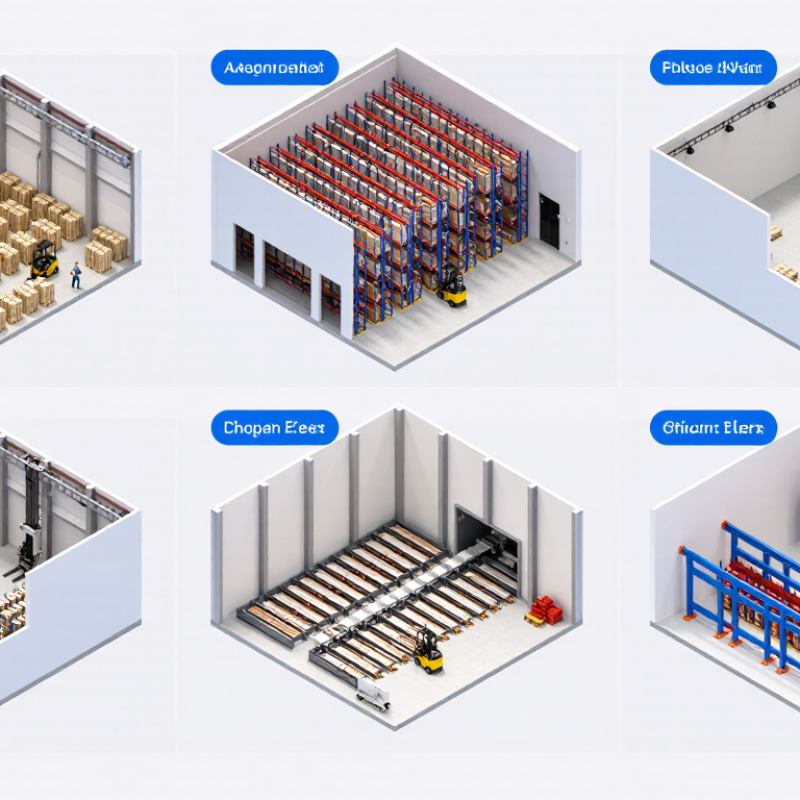
Warehouse stacking systems trade floor density against pallet access and capital cost. Floor stacking places loads directly on the floor; block stacking builds grouped piles, often for uniform goods. Both are inexpensive, but only the top or front loads remain easy to reach. Selective pallet racking gives direct access to every pallet, though its aisles consume valuable floor space. Drive-in racking stores pallets several positions deep. Dense, yes—but forklifts must enter the rack, and stock rotation becomes less flexible.
Push-back systems use nested carts, while pallet-flow racks move loads along inclined rollers. Both increase density and support last-in, first-out or first-in, first-out handling, depending on the design. Mobile racks shift to open an aisle, improving space use without eliminating access. They cost more and may slow picking while aisles move. The trade-off is real. A warehouse handling mixed products may value access more than maximum density; one SKU stored in large lots may justify deeper lanes. Product dimensions, pallet condition, forklift turning radius, and replenishment patterns can change the answer.
MHI’s 2024 Annual Industry Report found that 55% of surveyed organizations planned to adopt robotics and automation within five years. That figure does not prove automated storage pays off in every building, but it signals growing investment in labor-saving systems.
Compare total installed cost with usable pallet positions, retrieval time, and maintenance needs. A layout that looks efficient on paper can disappoint when operators face blocked loads or awkward replenishment. Check the actual workflow before choosing.
What Are the 7 Best Stacking Systems for Warehouses?
Block Stacking and Selective Pallet Racking
Block stacking places loaded pallets directly on the floor, often in stable, clearly marked lanes. It needs little equipment and can use floor space efficiently. But access is limited: reaching a pallet at the back may mean moving others first. This works best for uniform goods that move quickly and can tolerate stacking pressure. Check pallet condition, load stability, and stack height every shift. A neat-looking stack is not always a safe one.
Selective pallet racking gives each pallet a direct storage location. Forklift operators can retrieve specific loads without shifting neighboring pallets, which suits warehouses with many product types. The trade-off is wider aisles and more floor area devoted to access. Rack layout, load ratings, and forklift turning space should match actual operations, not just a plan on paper. Small measurement errors matter.
Tips: Mark block-stack lanes and keep incompatible loads apart. For racking, display load limits where operators can see them, and inspect beams and uprights for damage. Measure twice. Review pick patterns seasonally; a system that worked last year may now create congestion.
Typical pallet selectivity by storage system
Relative selectivity rating: 1 means low and 5 means high. Selective pallet racking generally gives direct access to each pallet; dense systems such as block stacking and drive-in racking typically require moving other pallets to reach stock. Ratings are qualitative comparisons of typical layouts, not measured performance figures. Actual access depends on the design and operating method.
Double-deep racking stores two pallets behind each front position, increasing storage density without requiring a forklift to enter the rack. It suits warehouses with several pallets of the same product and steady inventory rotation. A reach truck with extended forks is typically needed to access the rear pallet. The front pallet must move first. That small detail can complicate picking when stock levels are low.
Drive-in and drive-through systems place pallets on rails inside deep lanes. Forklifts enter the lanes, so operators need consistent pallet sizes and clear procedures. Drive-in lanes usually load and unload from the same end, making them suited to last-in, first-out handling. Drive-through lanes are accessible from both ends and can support first-in, first-out flow when loading and picking are organized from opposite ends. They are not interchangeable in every operation.
Both systems can make better use of floor space, but dense storage leaves less room for direct access. That trade-off is easy to underestimate. A lane holding many pallets may still cause delays if workers need a pallet near the back. Review product turnover, pallet condition, forklift dimensions, and required clearances before choosing a layout. Walk the proposed routes with operators, too. A drawing may look efficient; a busy shift can expose awkward turns or blocked access. Safety checks and regular rack inspections matter.
Push-back and pallet flow racking store pallets several positions deep, using warehouse height and floor space efficiently. They suit operations that move multiple pallets of the same product. Space is gained. But access to each individual pallet is limited.
Push-back systems typically work on a last-in, first-out basis: a new pallet pushes earlier pallets farther along a sloped rail. Pallet flow racking uses gravity rollers to move pallets toward the picking face, usually supporting first-in, first-out rotation. That can help with dated inventory. It also means rollers, brakes, and lane separators need regular inspection.
The right choice depends on stock rotation, pallet condition, load weight, and forklift traffic. Pallets must be consistent enough to travel safely through the lanes; damaged boards or uneven loads can cause jams. A warehouse should verify rack capacity, aisle clearance, and operating procedures with a qualified storage-system professional before installation. These systems can improve throughput, but the trade-off is easy to underestimate: a poorly matched lane may slow picking instead of speeding it up.
Mobile racking places pallet rows on powered or manual carriages, opening an aisle only where staff need access. It can use floor space efficiently when a warehouse has limited room for fixed aisles. It is one option among selective, double-deep, drive-in, push-back, pallet-flow, and cantilever systems. The right choice depends on inventory and handling needs, not density alone. Mobile racks can slow access when several aisles are needed at once.
That matters.
Check how many SKUs require direct access, how often each pallet moves, and whether stock rotates quickly. Mobile racking often fits slower-moving goods with many pallets per SKU. Measure pallet sizes, loads, ceiling height, and forklift turning space.
Have the floor and slab capacity assessed before installation; moving loaded rows adds demands that ordinary static layouts may not. Check aisle controls, emergency access, and maintenance plans, too. A site walk-through helps reveal awkward columns or uneven floors.
Small details matter. I would not choose this system on a space-saving estimate alone; a short picking trial can expose delays that a layout drawing misses.
Higher density often means less direct pallet access. Floor and block stacking cost less, but workers may need to move other loads first.
It gives direct access to every pallet, which helps with mixed products and frequent picking. The aisles use valuable floor space.
It stores a second pallet behind each front position. A reach truck with extended forks is usually needed, and the front pallet must move first.
Drive-in lanes load and unload from the same end, commonly supporting last-in, first-out handling. Drive-through lanes have access at both ends and can support first-in, first-out flow.
Yes. A pallet near the back may take time to retrieve, especially during a busy shift. Density is not the whole story.
It can reduce fixed-aisle space by moving pallet rows to open an aisle. It may suit slower-moving goods stored in many pallets per product.
Measure pallet sizes, ceiling height, and forklift turning space. Assess the floor and slab, aisle controls, emergency access, and maintenance needs.
Walk the routes with operators and check turns, columns, and replenishment paths. A short picking trial may reveal delays a drawing misses. I would not rely on estimates alone.
Warehouse Stacking Systems vary in how much storage density they provide, how easily workers can reach each pallet, and how much they cost to install and operate. Block stacking is a simple, space-efficient option for stable loads, while selective pallet racking offers direct access to individual pallets. Double-deep racking increases capacity but requires equipment that can reach farther into the rack. Drive-in and drive-through systems use shared lanes to store large quantities of similar goods, trading some selectivity for greater density.
Push-back and pallet flow racking support high-density storage while helping manage stock rotation, with goods moving through the system by gravity or as new pallets are added. Mobile racking places shelving on movable bases to make better use of floor space, though it may involve higher costs and more complex operation. Choosing the right system depends on inventory variety, turnover, available space, equipment, budget, and the level of pallet access a warehouse needs.

Kelida Racking